Septic Tank Cleaning & Pumping in Aurora, CO — Fast, Professional & Available 24/7
Aurora septic pumping and wastewater service to prevent backups, protect your property, and maintain reliable onsite wastewater systems.
A full septic tank can lead to slow drains, sewage backups, unpleasant odors, drain-field damage, and expensive property disruption. Stanley Rora Plumbers provides septic tank cleaning and pumping coordination in Aurora, CO, for homes, rural properties, multifamily sites, and qualifying commercial facilities. Since 2010, we have helped property owners identify septic warning signs, plan routine pumping, address plumbing problems connected to onsite wastewater systems, and coordinate licensed septic service when specialized pumping or disposal is required.
- Septic pumping, cleaning, inspection, and maintenance coordination
- Residential, rural, multifamily, and qualifying commercial wastewater support
- Fast response for slow drains, backups, odors, and plumbing concerns
- 24/7 emergency plumbing availability for urgent wastewater-related problems
Call +1 (720) 599-1911 to schedule septic-system assessment, septic pumping coordination, or emergency plumbing support.
Request Septic Tank Service
Fill out the form below and we'll contact you immediately!
Septic Tank Cleaning & Pumping Backed by 16+ Years of Plumbing Experience
Choose a local plumbing team that understands drainage, wastewater risks, and the importance of licensed septic service.
Septic pumping is not simply a drain-cleaning job. It involves removing accumulated solids and scum from an onsite wastewater treatment system, transporting septage safely, and disposing of it through an approved process. Stanley Rora Plumbers helps Aurora customers assess plumbing and septic concerns, coordinate qualified pumping service, and plan repairs or maintenance based on the system's condition and local requirements.
16+ years serving Aurora, Adams County, and the Denver metro area
Master plumber and journeyman plumbing professionals on staff
Insured for general liability, commercial auto, workers' compensation, and equipment coverage
Plumbing support plus septic pumping coordination through qualified providers
Clear recommendations for septic maintenance, drainage issues, and related plumbing repairs
Septic Tank Cleaning & Pumping Near Aurora Neighborhoods & Surrounding Areas
Supporting properties with onsite wastewater systems in Aurora's outer areas and nearby Colorado communities.
Many central Aurora properties are connected to municipal sewer, but some outer-area homes, rural properties, and nearby communities may depend on onsite wastewater treatment systems. Stanley Rora Plumbers helps customers determine whether their drain and wastewater concerns relate to a private septic system, a sewer connection, or another plumbing issue before recommending the next step.
Aurora Communities
Murphy Creek, Aurora Highlands, Copperleaf, Conservatory, Saddle Rock, Tallyn's Reach, Seven Hills, Smoky Hill
Nearby Service Areas
Brighton, Berthoud, Longmont, Thornton, Westminster, Arvada, Lakewood, Littleton
Regional Property Types
Rural homes, acreage properties, detached homes, multifamily sites, commercial facilities, and managed communities
Specialized Septic Tank Cleaning & Pumping for Onsite Wastewater Systems
Aurora plumbing support and licensed septic-service coordination for wastewater systems that need professional care.
A septic system includes a septic tank, inlet and outlet components, baffles or tees, solids layers, effluent flow, a distribution system, and a drain field or other approved treatment component. Pumping requires specialized vacuum equipment, compliant transport, and lawful disposal. Stanley Rora Plumbers can address connected plumbing concerns and coordinate a properly licensed septic cleaner when tank pumping, septage hauling, or system-specific service is required.
Professional evaluation of plumbing symptoms that may indicate a septic issue
Licensed septic pumping and systems-cleaner coordination where required
Clear maintenance, inspection, repair, and referral recommendations
What Happens When a Septic Tank Fills or Fails in Aurora?
Common septic problems property owners face—and why prompt action protects your property and the environment.
A septic tank separates solids, scum, and wastewater before effluent moves to the next part of the onsite wastewater system. If solids build up too far, they can move toward the drain field, reduce treatment performance, cause backups, create odors, and increase the risk of system failure. Routine pumping removes accumulated material that cannot fully decompose and helps protect the wastewater system.
Slow drains, gurgling toilets, sewage odors, and wastewater backups
Damage to drain fields or treatment areas when solids are not removed
Contamination and public-health concerns from untreated wastewater
Costly repair or replacement needs after prolonged neglect
Property-use disruption for residents, tenants, guests, or commercial facilities
How Often Should You Pump a Septic Tank in Aurora?
Routine inspection and pumping intervals should be based on tank size, occupancy, use, and local requirements.
There is no single pumping interval that fits every septic system. Tank capacity, number of occupants, wastewater volume, use of garbage disposals, laundry habits, property type, and the system's inspection findings all matter. General guidance commonly recommends inspection every one to three years and pumping about every three to five years, while some Colorado guidance advises shorter intervals for high-use homes or systems with smaller tanks.
| Maintenance Task | Description | Typical Timing | Compliance/Impact |
|---|---|---|---|
| Septic-system inspection | Review tank condition, sludge/scum levels, components, and system performance | Every 1–3 years or per local rules | Identifies pumping and repair needs |
| Tank pumping | Remove accumulated solids and scum using licensed pumping service | Often every 3–5 years; varies by use | Protects tank and drain field |
| Inlet/outlet review | Inspect accessible tees, baffles, lids, risers, and connections | During pumping/inspection | Supports proper wastewater flow |
| Filter maintenance | Clean or service an effluent filter if installed | Per manufacturer/service plan | Helps protect downstream treatment |
| Documentation | Retain pumping, disposal, inspection, and repair records | Every service visit | Supports property records and compliance |
Seasonal Timing Tips
- Schedule pumping before high-occupancy seasons, large gatherings, or peak rental use.
- Plan inspection and pumping before property sales, major renovations, or long periods of vacancy.
- Avoid waiting until drains back up; emergency pumping may cost more and may not prevent drain-field damage.
Frequency Note
A typical household may need pumping approximately every three to five years, but smaller tanks, larger households, garbage-disposal use, high wastewater volume, and system-specific requirements can require more frequent service. Jefferson County's table illustrates how recommended intervals decrease as household occupancy increases relative to tank size.
Cost Range Note
Septic pumping costs depend on tank size, access, tank condition, required digging, solids level, travel, disposal requirements, inspection needs, and emergency timing. National service-platform data cited by Thumbtack places typical pumping around $355–$575, but Aurora-area pricing should be confirmed through a licensed local provider.
Maintenance Best Practices
Who Needs Septic Tank Cleaning & Pumping in Aurora?
From rural homes to managed properties and qualifying commercial wastewater systems.
Any property served by an onsite wastewater treatment system needs a maintenance plan. Stanley Rora Plumbers helps property owners identify septic-related plumbing concerns, arrange qualified pumping, and plan service based on property occupancy, tank size, wastewater demand, and applicable local requirements.
Single-family homes on private septic systems
Acreage properties and rural homes outside municipal sewer coverage
Vacation homes, short-term rentals, and seasonal properties
Multifamily properties with approved onsite wastewater systems
Restaurants, hospitality sites, and qualifying commercial properties with OWTS
Community facilities, churches, camps, and rural business locations
How Colorado Weather, Water Use & Soil Conditions Affect Septic Tank Lifespan
Freeze cycles, heavy water use, household habits, soil conditions, and drain-field care all affect onsite wastewater performance.
Colorado septic systems can face seasonal temperature swings, ground freezing, variable soil conditions, changes in groundwater, and high water demand. Excessive water use, vehicle traffic over tanks or drain fields, heavy grease discharge, poor drainage around the system, and delayed pumping can shorten the functional life of wastewater components.
Winter
Frozen conditions can affect access, plumbing flow, and shallow components.
Spring
Snowmelt and rain can saturate soils and expose drainage concerns.
Summer
High occupancy, irrigation, and guests can increase wastewater volume.
Fall
A useful time to inspect and pump before winter access conditions become harder.
What Septic Tank Systems and Components Need Service?
Understanding the onsite wastewater components that protect your property and the surrounding environment.
Every onsite wastewater treatment system has a specific design, capacity, and maintenance requirement. Stanley Rora Plumbers can help identify visible plumbing and drainage concerns, while qualified septic professionals inspect, pump, clean, and service tanks and treatment components according to local rules.
| System/Component | Typical Use | Common Concern | Service Need |
|---|---|---|---|
| Conventional septic tank | Homes and small properties | Sludge/scum accumulation | Inspection and routine pumping |
| Pump tank | Systems requiring wastewater lift | Pump failure, alarm issues, electrical problems | Regular inspection and maintenance |
| Effluent filter | Tank outlet protection | Clogging or restricted flow | Cleaning during service |
| Drain field | Soil treatment area | Saturation, solids intrusion, vehicle damage | Protect from overload and damage |
| Advanced OWTS | Higher-treatment systems | Specialized components and service needs | Follow required maintenance plan |
| Commercial OWTS | Qualifying higher-use properties | High volume, grease, system capacity | Professional inspection and compliance planning |
Note on Regulation
Colorado classifies septic systems as onsite wastewater treatment systems. Systems at or below 2,000 gallons per day are generally permitted locally, while larger systems require state facility design review.
Our 6-Step Septic Tank Cleaning & Pumping Process
What to expect when Stanley Rora Plumbers helps coordinate septic pumping and connected plumbing service.
Initial Call & Property Assessment
We discuss drain symptoms, tank location, prior pumping date, occupancy, property type, and emergency concerns.
System & Access Review
We identify accessible plumbing symptoms, septic access conditions, tank records, and whether qualified pumping coordination is needed.
Licensed Septic Pumping Coordination
A qualified systems cleaner pumps the tank, removes solids, and handles transport/disposal through the required process.
Inspection Findings Review
We review available pumping and inspection observations, including tank condition, baffles, filters, access, and possible repair needs.
Plumbing Repair or Septic Recommendation
We address related plumbing concerns or recommend qualified OWTS repair, engineering, or local health-department guidance.
Documentation & Reminder Planning
Keep pumping records, set a maintenance reminder, and plan future inspection based on system use and local requirements.
What's Included in Our Septic Tank Cleaning & Pumping Service
Clear deliverables for property owners with onsite wastewater systems.
Every septic service request begins with a review of your plumbing symptoms, septic history, access conditions, and property needs. Where tank pumping is required, service should be completed by a licensed septic systems cleaner or approved provider capable of compliant hauling and disposal.
Initial symptom, tank-history, and property-use discussion
Review of accessible drains and plumbing concerns connected to wastewater flow
Coordination with a qualified septic pumping provider where required
Tank pumping, solids removal, and approved disposal documentation
Inspection findings and recommendations for filters, access, repairs, or future maintenance
Recordkeeping guidance for property owners, managers, and future service needs
Key Advantages of Working with Stanley Rora Plumbers
Practical plumbing diagnostics, qualified septic-service coordination, and long-term maintenance support.
Our septic tank service approach helps Aurora property owners understand whether they have a plumbing problem, a tank-maintenance issue, a drain-field concern, or a need for specialized onsite wastewater service.
Qualified Coordination
Qualified septic pumping coordination where required for compliant hauling and disposal.
Maintenance Planning
Clear maintenance planning based on occupancy, tank size, use, and service history.
24/7 Emergency
Emergency plumbing response for urgent wastewater backups and drainage concerns.
Septic Tank Cleaning & Pumping Transformations for Aurora Properties
What changes after a septic system is inspected, pumped, and placed on a practical maintenance schedule.
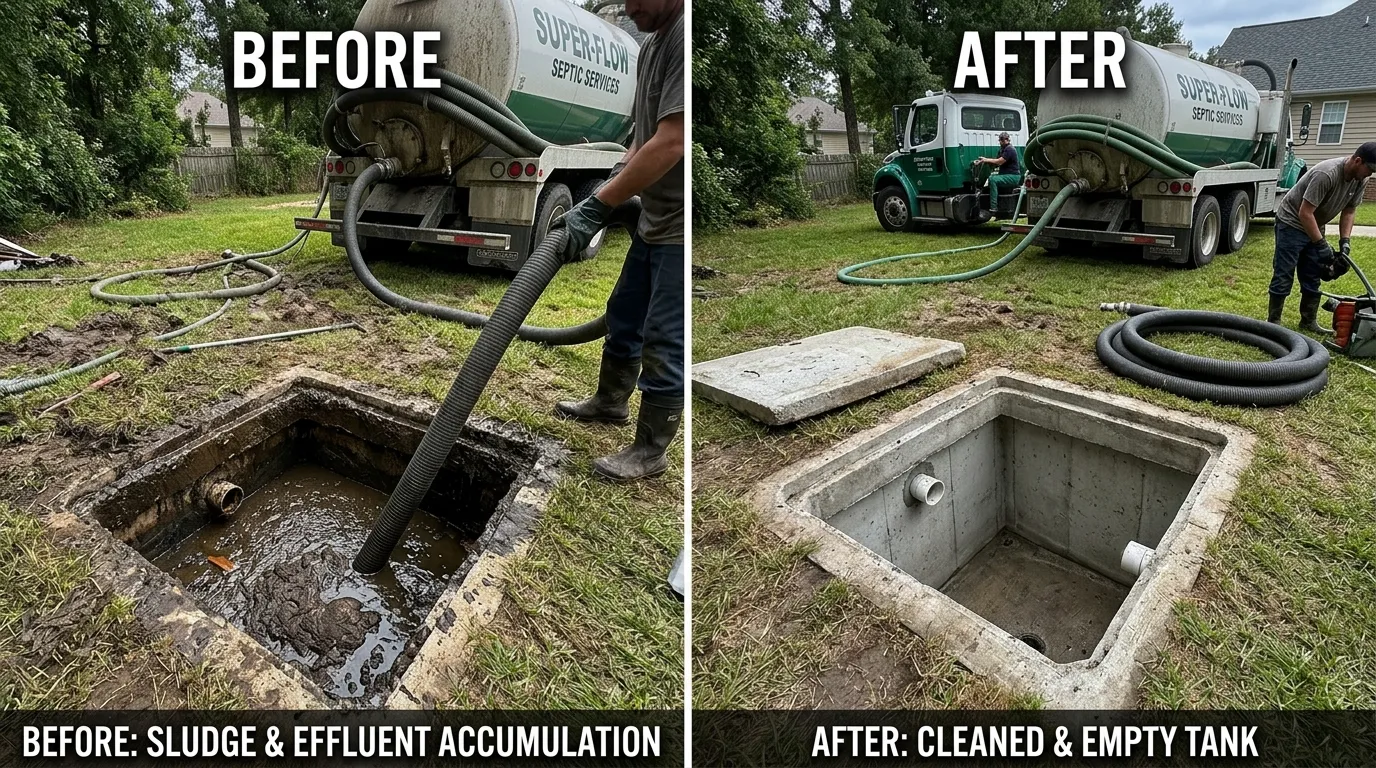
Many owners contact us because they do not know when the tank was last pumped, notice slow drains or odors, or are preparing a property for sale, tenancy, or high occupancy. After qualified pumping and documentation, they gain a clearer record of system maintenance and a better plan for protecting the drain field.
Unknown pumping history, slow drains, odors, or backup concerns.
Documented service and a defined maintenance interval.
Tank solids accumulating without a maintenance plan.
Pumping completed and future inspection reminders established.
Confusion about plumbing versus septic-system concerns.
Clearer recommendations for plumbing, tank service, or specialized OWTS repairs.
How Septic Tanks Are Cleaned, Pumped & Maintained
Qualified pumping, responsible septage handling, system inspection, and practical maintenance planning.
Septic pumping requires purpose-built vacuum equipment, maintained hoses, secure hauling tanks, and approved disposal processes. Local systems-cleaner rules typically address licensing, transport, disposal, equipment condition, records, and spill prevention.
Qualified vacuum-pumping equipment for removing sludge, scum, and wastewater solids
Safe tank-access practices and inspection of accessible components
Compliant hauling and disposal by authorized septic-service providers
Documentation of pumping, service observations, and recommended next steps
Should You Pump a Septic Tank or Replace a Failing System?
Helping Aurora property owners distinguish routine tank maintenance from structural OWTS problems.
Routine pumping removes accumulated solids and is an essential part of septic maintenance. However, pumping does not repair a damaged tank, failed pump, saturated drain field, broken distribution component, collapsed line, or improperly designed system. Inspection findings determine whether maintenance, repair, or a larger replacement project is appropriate.
| Scenario | Pumping/Maintenance Recommended | Repair/Replacement Recommended |
|---|---|---|
| Tank overdue for routine service | Yes | Not usually |
| Sludge and scum accumulation | Yes | Not usually unless tank is damaged |
| Clogged effluent filter | Yes, clean/service filter | Replace if filter or components are damaged |
| Broken tank lid, riser, baffle, or pipe | Pump if needed | Repair or replace damaged component |
| Repeated backups after pumping | Inspect system | Likely needs further evaluation |
| Saturated, failed, or damaged drain field | Pump may provide temporary relief | System repair/replacement assessment needed |
When Replacement Is Right
- The tank, pump, distribution system, or drain field has documented structural failure.
- Backups or drainage problems continue after proper pumping and maintenance.
- A qualified OWTS professional or local authority identifies a system condition requiring replacement or redesign.
How Much Does Septic Tank Pumping Cost in Aurora, CO?
Clear estimates based on tank capacity, access, solids level, pumping scope, and local disposal requirements.
Septic pumping costs vary by tank size, access, lid location, digging needs, wastewater volume, solids level, travel distance, emergency timing, inspection scope, and local disposal requirements. A properly licensed septic service provider should provide a project-specific estimate after reviewing the system.
Main Cost Drivers
- Tank size, number of tanks, and accumulated solids or scum
- Ease of locating and accessing lids, risers, and pumping points
- Need for excavation, difficult terrain, or extended hose runs
- Inspection, filter service, repairs, or additional wastewater components
- Emergency or after-hours service versus scheduled maintenance
| Service Type | Typical Estimate Factors |
|---|---|
| Routine septic tank pumping | Tank size, access, solids level, and disposal |
| Septic inspection | System type, tank access, components, and reporting requirements |
| Filter or component service | Filter type, access, labor, and repair needs |
| Emergency septic backup response | Urgency, wastewater volume, access, and plumbing condition |
| Commercial OWTS service | Flow volume, tank capacity, equipment, compliance, and site access |
Cost Reference Note
Thumbtack reports a national average range of approximately $355–$575 for septic tank cleaning or pumping, but local pricing can vary significantly. Use an on-site quote from a licensed local systems cleaner.
Which Aurora Properties Need Professional Septic Tank Cleaning?
Warning signs that your onsite wastewater system may be overdue for service.
Professional septic pumping is recommended when a property has an onsite wastewater system and the pumping history is unknown, when inspection indicates solids accumulation, or when wastewater symptoms suggest a potential tank or system concern.
Homes with private septic tanks and no recent pumping record
Properties with slow drains, gurgling toilets, sewage odors, or wastewater backups
Rural homes, acreage properties, and properties outside municipal sewer areas
Vacation rentals, seasonal homes, and high-occupancy properties
Multifamily or commercial sites with approved onsite wastewater systems
Properties preparing for sale, transfer, renovation, or major occupancy changes
Septic Tank Cleaning & Pumping for Commercial & Multi-Unit Properties
Support for qualifying onsite wastewater systems serving businesses, facilities, and managed properties.
Commercial and multi-unit onsite wastewater systems can have higher wastewater volumes, more complex components, larger tanks, grease-related demands, pumps, alarms, and specialized maintenance requirements. Stanley Rora Plumbers supports plumbing diagnostics and septic-service coordination for qualifying properties, while licensed OWTS professionals handle required pumping, hauling, disposal, inspection, and system-specific work.
| Service | Description |
|---|---|
| Commercial septic assessment | Review plumbing symptoms, tank history, property use, and wastewater demand |
| Licensed pumping coordination | Arrange qualified tank cleaning, pumping, hauling, and disposal |
| Drain and plumbing repair | Address connected fixtures, drains, leaks, and wastewater-flow problems |
| Maintenance planning | Develop scheduled inspection and pumping reminders |
| OWTS repair referral | Coordinate with qualified specialists for system-specific repair or design needs |
Commercial Property Types
- Rural restaurants, cafés, breweries, and food-service facilities
- Hotels, camps, lodges, resorts, and hospitality properties
- Multifamily properties with approved onsite wastewater systems
- Churches, schools, event venues, and community facilities
- Warehouses, rural offices, and commercial sites beyond municipal sewer service
Why Commercial Owners Choose Us
- Plumbing and drain expertise combined with qualified septic-service coordination
- Clear maintenance planning for high-use wastewater systems
- Documentation support for property managers, compliance files, and maintenance records
| Commercial Service | Typical Considerations |
|---|---|
| Multi-unit septic pumping | Occupancy, tank count, access, flow volume, and service frequency |
| Restaurant OWTS support | Kitchen use, grease control, wastewater volume, and maintenance records |
| Pump or advanced system service | Equipment type, alarm status, manufacturer plan, and qualified provider needs |
| Large-system evaluation | Flow threshold, local rules, engineering, design review, and repair scope |
Benefits of Hiring Qualified Septic Tank Pumping Pros in Aurora
Protect your drain field, prevent wastewater backups, and preserve your property's wastewater system.
Professional septic pumping removes accumulated solids before they can move into downstream treatment components. Combined with smart water use, regular inspection, recordkeeping, and prompt plumbing repair, maintenance can help extend system life and reduce the risk of expensive failures.
Reduce the risk of sewage backups, odors, and wastewater overflows
Protect the drain field from solids accumulation and excessive loading
Maintain records for property management, sales, rentals, and future service
Identify plumbing and wastewater concerns before they become larger system problems
Why DIY Septic Tank Pumping or Entry Is Dangerous
Critical reasons to use qualified, licensed septic-service professionals.
Safety First — Never Attempt DIY Septic Pumping
Never enter a septic tank, lean into an open tank, or attempt DIY pumping. Septic tanks can contain toxic gases, low oxygen, harmful pathogens, unstable surfaces, and drowning hazards. Professional systems cleaners use specialized equipment and safety procedures for pumping and handling septage.
- Septic gases can be toxic, flammable, or oxygen-displacing
- Open tanks create fall and drowning hazards
- Untreated wastewater can expose people to serious health risks
- Unlicensed hauling or disposal can create environmental and legal problems
Answers to Common Septic Tank Questions in Aurora
Direct answers about pumping frequency, warning signs, maintenance, and qualified septic service.
How often should I pump my septic tank?
Many homes need pumping about every three to five years, but the correct interval depends on tank size, household size, water use, garbage-disposal use, and inspection findings. Some systems need more frequent service.
What are signs that my septic tank is full?
Slow drains, gurgling toilets, sewage odors, wastewater backups, wet areas near the tank or drain field, and unusually green grass over a system area can indicate a concern. These signs can also have other plumbing causes, so professional evaluation is important.
Can I use additives instead of pumping my septic tank?
Additives do not replace routine pumping or inspection. Solids that accumulate in a septic tank still need periodic removal by qualified pumping service.
What should I avoid putting into a septic system?
Avoid wipes, grease, oils, chemicals, medications, cat litter, diapers, sanitary products, cigarette butts, and non-biodegradable materials.
Can Stanley Rora Plumbers pump my septic tank?
Septic pumping must be completed by a properly licensed systems cleaner or approved provider with compliant hauling and disposal capability. Stanley Rora Plumbers can assess plumbing concerns and coordinate qualified septic service where required.
You're Supported from First Septic Concern to Ongoing Wastewater Maintenance
Clear plumbing guidance, qualified septic-service coordination, and practical support for Aurora properties.
Stanley Rora Plumbers helps customers address septic-related plumbing concerns with clear communication, responsible service coordination, and practical recommendations. We focus on protecting your property, wastewater system, drainage components, and long-term maintenance record.
If an eligible plumbing repair related to your septic system has a workmanship concern during the stated warranty period, contact our team so we can review the issue and outline appropriate corrective options.
Stanley Rora Plumbers
9650 E 25th Ave
Aurora, CO 80010, United States
Licenses & Credentials That Support Septic Tank Cleaning & Pumping
The correct qualifications matter when wastewater pumping, hauling, disposal, and system maintenance are involved.
Septic pumping and cleaning may require a local systems-cleaner license, maintained hauling equipment, approved disposal procedures, and records. Colorado local public-health agencies regulate many OWTS requirements, while plumbing repairs to connected building systems require qualified plumbers.
Master Plumber License
Journeyman Plumber License
Registered Apprentice Plumber Support Team
Verified Local Systems-Cleaner License & Qualified Pumping Partner Network
OWTS Maintenance & Specialist Referral Network
Emergency Septic Tank Service in Aurora, CO
Rapid help when wastewater backups, drain failures, and plumbing emergencies threaten your property.
A septic emergency can involve sewage backups, overflowing fixtures, wastewater odors, slow drains throughout the property, or visible water near a tank or treatment area. Stanley Rora Plumbers provides 24/7 emergency plumbing support and coordinates qualified septic pumping or OWTS service when specialized response is required.
Emergency Process
- Immediate phone consultation to assess wastewater symptoms and property risk
- Guidance to stop water use if backup or overflow is occurring
- Dispatch of plumbing support for connected drain and fixture concerns
- Coordination with qualified septic pumping or OWTS professionals where required
Emergency Scenarios
- Sewage backing up into toilets, tubs, showers, sinks, or floor drains
- Wastewater overflow near a septic tank, cleanout, or drain-field area
- Multiple drains slow or backing up across the property
- Commercial wastewater issue affecting guests, tenants, kitchens, or operations
Insurance Claim Assistance for Septic & Wastewater Incidents
Helpful service records when a septic backup or wastewater failure affects your property.
If a septic-system or plumbing backup contributes to property damage, insurers, property managers, and restoration teams may need documentation of the observed condition, pumping records, and completed plumbing work. Stanley Rora Plumbers can provide relevant documentation for work within our approved scope.
Initial notes describing observed plumbing symptoms and accessible conditions
Photos of visible plumbing or wastewater damage where appropriate
Invoices for approved plumbing repairs and qualified septic-service coordination
Pumping, inspection, and maintenance records supplied by the authorized provider
Policy Note
Coverage depends on policy language, sewer/septic-backup endorsements, exclusions, maintenance history, cause of loss, and insurer review.
Warranty Coverage for Septic-Related Plumbing Work
Understand what support applies to completed plumbing repairs and coordinated septic service.
Stanley Rora Plumbers provides clear warranty information for eligible plumbing repairs related to septic-connected drains, fixtures, water lines, or building plumbing. Pumping, hauling, disposal, tank condition, drain-field performance, and OWTS components may be subject to the terms of the independent licensed service provider.
| Coverage Type | Description |
|---|---|
| Plumbing workmanship | Eligible labor coverage for approved plumbing repairs |
| Parts/materials | Applicable manufacturer terms for installed plumbing components |
| Septic-provider records | Pumping, inspection, hauling, and disposal documents from qualified provider |
| Documentation | Service records for future maintenance and warranty questions |
Important Notes
Tank pumping does not guarantee drain-field performance or correct structural defects, root intrusion, groundwater conditions, misuse, overloading, or undocumented prior system damage.
5 Equipped Service Vehicles Serving Aurora & the Denver Metro Area
Plumbing diagnostic tools, repair materials, and qualified septic-service coordination when pumping is required.
Stanley Rora Plumbers operates five equipped service vehicles for plumbing diagnostics, drain and fixture service, water control, pipe repair, and emergency response. Septic tank pumping requires specialized vacuum-hauling equipment and should be performed by a licensed systems cleaner or approved septic provider.
Professional plumbing tools for drains, leaks, fixtures, pipes, and wastewater-related diagnostics
Common repair materials for plumbing connected to septic systems
Water-control and drain-clearing equipment for emergency plumbing support
Qualified septic pumping coordination when specialized vacuum equipment is required
Flexible Payment Options for Septic Repair & Wastewater System Projects
Helping Aurora property owners plan for major plumbing, tank, drain-field, and wastewater upgrades.
Routine pumping is generally a maintenance cost, but inspection findings may reveal a need for larger plumbing repairs, tank work, drain-field service, pump replacement, or system improvements. Stanley Rora Plumbers can discuss available payment or financing options for qualifying plumbing projects and help coordinate next steps with qualified OWTS providers.
Potential options for qualifying plumbing repairs and major system-related projects
Support for commercial, multifamily, and phased property improvements
Clear discussion of approved terms, scopes, schedules, and provider responsibilities
Recognition for Septic Support & Plumbing Excellence
Verified credentials and genuine recognition help property owners choose responsibly.
Stanley Rora Plumbers has earned recognition from industry organizations, trade groups, and community sources across our 16+ years of service in Aurora and the Denver metro area.
ColoradoBiz Top Company Awards
Quality Business Awards
Best Plumber Awards
Small Business of the Year
Tradesman of the Year
Senior & Military Discounts on Eligible Septic-Related Plumbing Services
Supporting qualifying Aurora seniors, active-duty service members, and veterans.
Stanley Rora Plumbers offers qualifying senior and military or veteran discounts on eligible plumbing repairs and related services. Any discount on septic pumping must be confirmed directly with the authorized septic-service provider handling pumping and disposal.
Senior Discount
Senior discount on qualifying plumbing repairs.
Military & Veteran
Military and veteran discount on eligible plumbing services.
Seasonal Promotions
Seasonal promotions for selected drain, pipe, and water-line services.
Provider-Confirmed Offers
Confirm septic pumping promotions with the licensed provider before scheduling.
Septic & Wastewater Plumbing Service Hours in Aurora, CO
24/7 emergency plumbing support for backups, drainage failures, and urgent wastewater concerns.
Stanley Rora Plumbers operates 24 hours a day, seven days a week, providing emergency plumbing support across Aurora. Septic pumping availability may depend on qualified provider dispatch, system access, local rules, and safe operating conditions.
| Day | Hours |
|---|---|
| Monday | 00:00–23:59 |
| Tuesday | 00:00–23:59 |
| Wednesday | 00:00–23:59 |
| Thursday | 00:00–23:59 |
| Friday | 00:00–23:59 |
| Saturday | 00:00–23:59 |
| Sunday | 00:00–23:59 |
Stanley Rora Plumbers vs Typical Septic Tank Service Providers in Aurora
What plumbing-led diagnostics and qualified pumping coordination add to septic maintenance.
A septic systems cleaner specializes in tank pumping, hauling, and disposal. Stanley Rora Plumbers adds connected-plumbing diagnostics, drain service, pipe repairs, fixture support, emergency response, and coordination with properly qualified septic providers where pumping or OWTS-specific work is required.
| Feature | Stanley Rora Plumbers | Typical Pumping-Only Provider |
|---|---|---|
| Plumbing diagnosis | Evaluates drains, fixtures, pipes, leaks, and wastewater symptoms | Focuses primarily on tank pumping |
| Septic pumping | Coordinated through qualified systems-cleaner service where required | Direct pumping and hauling |
| Drain and sewer support | Drain cleaning, backups, pipe work, fixture repair, and water control | May offer limited building plumbing service |
| Commercial capability | Supports plumbing needs for properties with qualifying OWTS | May focus mainly on residential tanks |
| Long-term planning | Maintenance reminders, plumbing guidance, and repair coordination | Basic pumping record only |
Contact Stanley Rora Plumbers for Septic Tank Cleaning & Pumping in Aurora, CO
Talk with a plumbing professional about septic-related drainage, pumping, and wastewater-maintenance needs today.
Whether you have slow drains, sewage odors, a septic tank overdue for pumping, an unknown maintenance history, an active wastewater backup, or a commercial onsite wastewater concern, Stanley Rora Plumbers is ready to help. Contact our Aurora team for plumbing assessment, emergency drain support, septic-service coordination, and practical maintenance guidance.
Contact Details
(720) 599-1911
9650 E 25th Ave
Aurora, CO 80010, United States
24/7 Emergency Service Available
Protect your property, drains, wastewater system, and long-term maintenance budget with professional septic tank cleaning and pumping coordination in Aurora, CO, from Stanley Rora Plumbers.