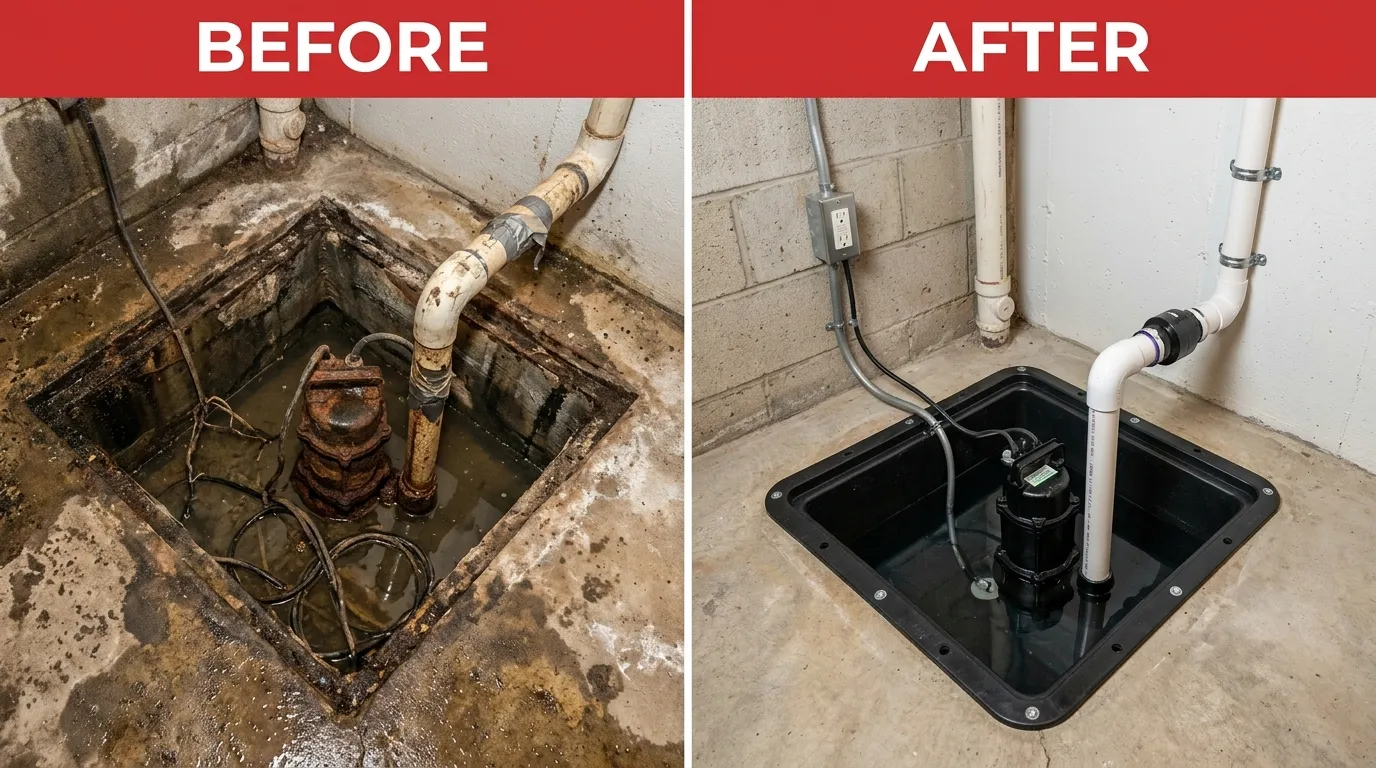
Prevent Flooding with Routine Sump Pump Maintenance in Aurora
A simple maintenance plan helps your pump activate when water levels rise.
Sump pumps do not require annual certification, but regular testing and maintenance are essential. Industry guidance commonly recommends testing a pump before wet seasons by adding water to the pit, checking float activation and automatic shutoff, inspecting discharge lines for obstructions, and clearing debris from the basin. Our drain cleaning and sewer camera inspection services can support broader drainage assessment when needed.
| Task | Description | Typical Timing | Impact |
|---|---|---|---|
| Pump activation test | Add water to the pit and verify activation and shutdown | At least annually | Confirms basic operation |
| Float-switch inspection | Check float movement and activation | During maintenance | Helps prevent failure to start |
| Check-valve review | Inspect accessible valve for backflow issues | During service | Supports proper discharge |
| Discharge-line inspection | Check for clogs, ice, damage, poor routing, or obstructions | Seasonal | Helps water move away |
| Basin cleaning | Remove accessible debris and sediment | During service | Protects pump intake |
| Backup-system review | Test battery or secondary pump where installed | Per manufacturer/service plan | Supports outage protection |
Spring
Test the pump before spring snowmelt and heavy-rain periods.
Winter Prep
Inspect discharge piping before freezing weather to reduce ice-related blockage risk.
Commercial
Schedule maintenance before seasonal occupancy, storm periods, or high-demand operations.
Testing Frequency: Test the pump at least once per year and more frequently for properties with frequent groundwater, past flooding, high occupancy, or critical commercial operations. Some local guidance recommends proactive replacement of aging pumps around the 7–10 year range, depending on use and condition.
Cost Ranges: Aurora market references estimate sump-pump diagnostics at roughly $75–$175, float-switch or check-valve work around $100–$250, discharge-line clearing around $125–$300, and complete pump replacement around $400–$900. Backup systems may add approximately $500–$1,200 depending on equipment and installation scope.
Maintenance Tips
- Keep the pump pit accessible and free of debris
- Never disconnect or block the discharge line
- Avoid routing discharged water toward the foundation or neighboring property
- Keep battery-backup systems tested and maintained if installed